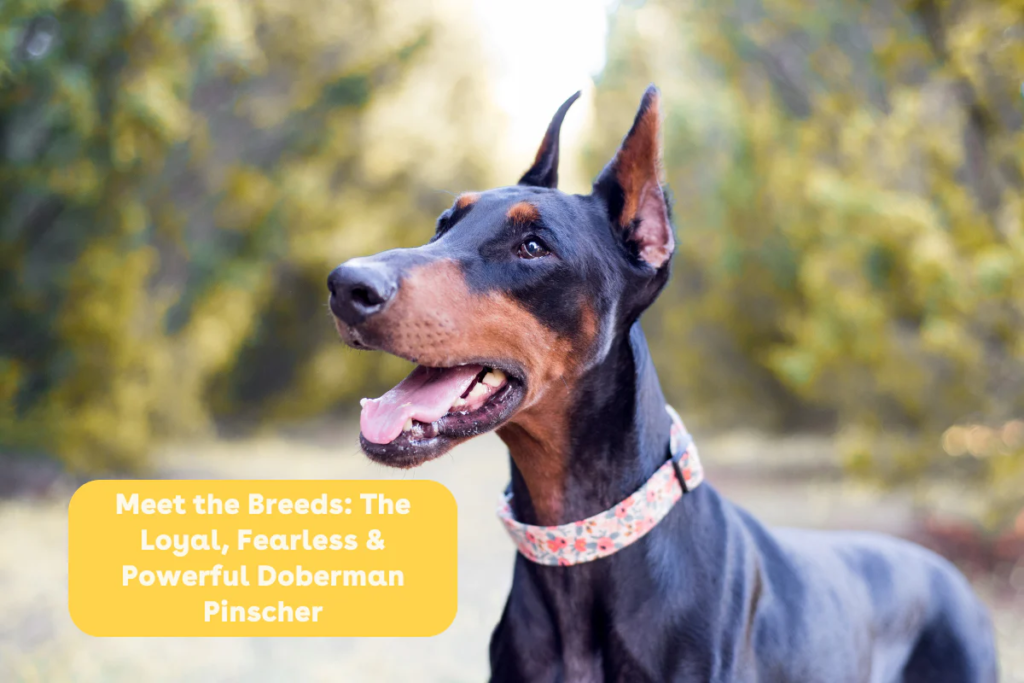
Elegant. Powerful. Intensely loyal. Few breeds command attention quite like the Doberman Pinscher.
Often misunderstood because of their sleek build and reputation as a guard dog, Dobermans are deeply people-oriented companions who thrive on connection, training, and purpose. When raised with thoughtful socialization and positive reinforcement, they are affectionate, intuitive, and remarkably devoted to their families.
Let’s take a closer look at this iconic breed, from their origins to their care needs, so you can decide whether a Doberman Pinscher is the right fit for your home.
Table of Contents
- History of the Doberman Pinscher
- Breed Development
- Roles in Society
- Life Expectancy and Health
- Comprehensive Care
- Busting Breed Myths
- Fun Facts About Doberman Pinschers

The Doberman Pinscher is a relatively modern breed compared to many others. They were developed in the late 19th century in the town of Apolda, Germany by a tax collector named Karl Friedrich Louis Dobermann.
Dobermann worked in a profession that required him to travel with money, often through unsafe areas. He wanted a loyal, protective dog to accompany him, one that was brave, intelligent, and physically capable. As a local dog warden, he had access to various breeds and began selectively breeding dogs that displayed the traits he valued most.
The result was a strong, athletic guardian with sharp intelligence and unwavering loyalty. After Dobermann’s death, German breeders continued refining the breed, improving consistency in temperament and structure.
The Doberman Pinscher was officially recognized by the American Kennel Club in 1908 and quickly gained popularity in the United States for both working roles and companionship.
Though their original purpose was protection, today’s Doberman is much more than a guard dog. With proper training and early socialization, they are affectionate family companions who bond deeply with their people.

The exact combination of breeds used to create the Doberman is not fully documented, but historians believe several played a role. Likely contributors include the Rottweiler, German Pinscher, Weimaraner, and possibly the Greyhound and Manchester Terrier.
These breeds contributed to the Doberman’s:
- Muscular yet lean build
- High intelligence and trainability
- Alert, protective instincts
- Endurance and speed
Over time, breeders focused on refining temperament as much as physical ability. Modern breeding programs emphasize stable, confident temperaments. Responsible breeders prioritize health testing and social stability to ensure that Dobermans are not only capable working dogs but also balanced family companions.
It’s also worth noting that ear cropping and tail docking have historically been common in the breed. While these practices were originally tied to working protection roles, many pet Dobermans today are left natural, and cropping is increasingly debated and restricted in some countries.

Few breeds have demonstrated as much versatility as the Doberman Pinscher.
Military and Police Work
Dobermans gained significant recognition during World War II when they served as military dogs, particularly with the U.S. Marine Corps. Their bravery and trainability made them excellent sentries, messengers, and scouts.
They have also worked in police and security roles due to their sharp intelligence and physical capability.
Personal Protection
Because of their loyalty and alertness, Dobermans have long been used as personal protection dogs. However, it’s important to understand that protection ability is not the same as aggression. A well-bred, well-trained Doberman is stable and discerning, not reactive or unpredictable.
Service and Therapy Work
Dobermans excel in obedience and advanced training. Some serve as service dogs, therapy dogs, and search-and-rescue partners. Their sensitivity to human emotion makes them surprisingly intuitive companions.
Family Companions
Today, many Dobermans live primarily as family dogs. When their mental and physical needs are met, they are affectionate, playful, and deeply attached to their pup parents.
They often form especially strong bonds with one person while still loving the entire household. Dobermans are sometimes called “velcro dogs” because of their desire to stay close to their humans.

The average lifespan of a Doberman Pinscher is 10 to 12 years. Like all purebred dogs, they are predisposed to certain health conditions. Responsible breeding, regular veterinary care, and proper nutrition can help support long-term wellness.
Dilated Cardiomyopathy (DCM)
One of the most significant health concerns in Dobermans is dilated cardiomyopathy, a heart condition that affects the heart muscle’s ability to pump effectively. Regular cardiac screenings and working with reputable breeders who test for DCM are critical.
Von Willebrand’s Disease
This inherited bleeding disorder affects clotting. Many breeders test for this condition to reduce the likelihood of passing it on.
Hip Dysplasia
While not as common as in some larger breeds, hip dysplasia can occur and may impact mobility over time.
Wobbler Syndrome
Cervical vertebral instability, often called Wobbler syndrome, can affect Dobermans and cause coordination issues due to spinal compression.
Hypothyroidism
This endocrine disorder can impact metabolism and energy levels.
Proactive veterinary care, including routine bloodwork and screenings, helps detect issues early. A balanced diet and appropriate exercise also play a significant role in maintaining overall health.

Dobermans are not a low-maintenance breed. They require thoughtful attention to exercise, training, nutrition, and socialization.
Exercise Needs
Dobermans are athletic and energetic. Daily exercise is essential, not just a short walk around the block. They thrive on activities like:
- Structured walks
- Running or hiking
- Obedience training sessions
- Scent work
- Agility
Without adequate physical and mental stimulation, Dobermans may develop unwanted behaviors such as excessive barking or destructive chewing. Enrichment and training help channel their intelligence productively.
🐶Related Reading: 7 Ways to Tell Your Dog Isn’t Getting Enough Exercise | Pupford
Training and Socialization
Early socialization is crucial. Dobermans are naturally alert and protective, so positive exposure to new environments, people, and other dogs during puppyhood helps build confidence rather than suspicion.
💖Debunking Common Dog Socialization Myths: A Guide for Every Pup Parent – Pupford
Training should rely on positive reinforcement, rewarding desired behaviors with treats, praise, or play. Dobermans are highly responsive and eager to work. Harsh corrections can damage trust and create fear-based behaviors.
Nutrition
A high-quality, balanced diet supports muscle maintenance and overall health. Because Dobermans are active and lean, proper protein levels are important.
Feeding schedules, portion control, and body condition monitoring help prevent obesity while maintaining muscle tone.
Learn how to choose the right food for your pup in our FREE Course!
Grooming
Dobermans have short, smooth coats that require minimal grooming. Weekly brushing helps reduce shedding and maintain coat health.
Regular nail trims, dental care, and ear checks are still important components of their routine care.
🐶Learn about cooperative care training to make grooming even easier
Living Environment
Dobermans thrive in homes where they are part of the family. They are not suited to living isolated outdoors. Their short coat offers little protection against extreme cold, and they crave human interaction.
They can adapt to various living spaces, including apartments, if their exercise and enrichment needs are consistently met.

Dobermans are often victims of stereotypes. Let’s address a few common misconceptions.
Myth #1: Dobermans Are Naturally Aggressive
Dobermans were bred to be protective and alert, not aggressive without reason. Aggression is typically the result of poor breeding, lack of socialization, or improper training.
Well-bred Dobermans with positive reinforcement training are stable, affectionate, and confident.
Myth #2: They Can’t Be Family Dogs
In reality, many Dobermans are gentle and loving with children when properly supervised and socialized. Like all breeds, interactions with kids should always be respectful and monitored.
💖The Impact of Dog’s on Children’s Development: Benefits for Kids Who G – Pupford
Myth #3: They Are Impossible for First-Time Pup Parents
While Dobermans do best with committed, consistent training, they are highly trainable and eager to please. With education and support, motivated first-time pup parents can succeed.
Myth #4: They Need Harsh Training
Because Dobermans are strong and protective, some assume they require dominance-based methods. Modern behavioral science shows that positive reinforcement builds stronger reliability and trust without increasing fear or reactivity.
🐕Debunking Alpha Dogs, Dominance, and Pack Leadership | Pupford
Dobermans respond beautifully to reward-based systems and thrive when training feels like teamwork.

- Dobermans were one of the first breeds trained specifically for personal protection work.
- They are ranked among the most intelligent dog breeds.
- A brave Doberman named Rex served with the U.S. Marine Corps during WWII and was awarded the Purple Heart for his bravery as a sentry and for helping locate wounded soldiers under fire.
- Another iconic Doberman named Kurt is remembered for saving an estimated 250 Marines on Guam by detecting mines and revealing hidden dangers on the battlefield.
Dobermans are loyal, intelligent, and deeply devoted companions. They are not a casual commitment, they require training, exercise, and consistent engagement. But for the right pup parent, they offer unmatched loyalty and partnership.
If you’re looking for a dog who bonds intensely, learns quickly, and thrives on shared activity, the Doberman Pinscher may be a perfect fit.
With thoughtful breeding, early socialization, and positive reinforcement training, this powerful breed reveals its true nature: not just a guardian, but a loving member of the family.
🦴Your Next Read: Meet The Breeds: The Ancient, Adored, and Irresistible Pug | Pupford