
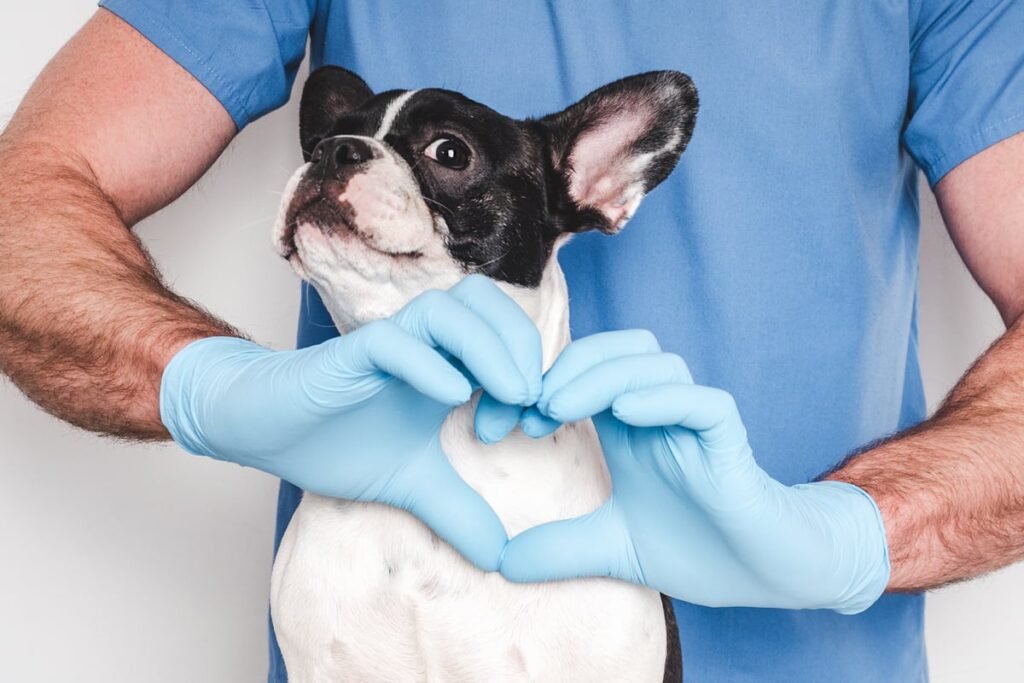
How Veterinarians Detect Heart Disease
Heart issues are often first suspected during a routine wellness exam. Your veterinarian may detect a heart murmur, irregular heartbeat or abnormal lung sounds. Further testing may include chest x-rays, bloodwork, or an echocardiogram among others.
Early diagnosis allows for medications and lifestyle adjustments that can significantly extend both lifespan and quality of life.
How You Can Support Your Pet’s Heart Health
While not all heart disease can be prevented, you can reduce risk and improve outcomes by:
- Keeping up with annual veterinary exams
- Maintaining a healthy weight
- Feeding a balanced, veterinarian-recommended diet
- Monitoring breathing rate while your pet sleeps
- Reporting subtle behavior changes early
For senior pets especially, proactive screening can make all the difference.
As a Heartfelt Reminder
This February, schedule a wellness check, learn your pet’s normal resting breathing rate, and take a moment to appreciate the steady rhythm of the heart that beats for you every day.