“Why does my dog ignore me when I call?”
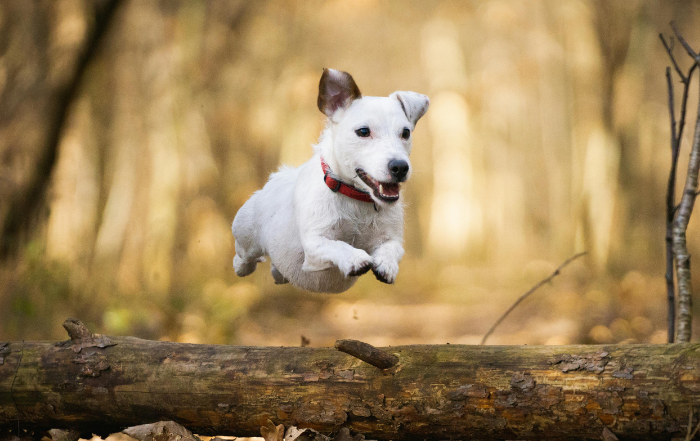
If you have ever asked that question, especially while watching your dog joyfully sprint in the opposite direction, you are not alone.
In most cases, a recall does not stop working because a dog is stubborn or choosing to ignore you. A recall breaks down when it has not yet been built across different environments, distractions, and emotional states. What works reliably at home often has not been fully learned in new or exciting situations.
So if your recall feels like it used to work and now it does not, let’s talk about why that happens and what actually fixes it.

The Recall Myth That Gets Dogs Into Trouble
A recall does not stop working because your dog is stubborn or disrespectful.
A recall fails because value was never properly built, transferred, or tested.
Like every behavior we shape, a recall comes down to three simple pieces:
- Identifying what your dog finds valuable
- Transferring that value to you and your cues
- Testing that value gradually and thoughtfully
Miss one of those steps and the recall will fall apart, usually right when distractions get real.

Why Most Recalls Break Down
Too Many Rehearsals of Anti-Recall Behavior
The number one reason recalls fail is rehearsal.
If a dog regularly finds reinforcement in the environment – chasing squirrels, following scent trails, greeting dogs – that behavior gets stronger every single time.
If you have a dog door and your dog spends the day rehearsing those rewards, it should not be surprising when a recall fails at the park.
Does that make a recall impossible? No.
Does it make it harder? Absolutely.
That is why when I bring home a puppy or a rescue dog, they go outside with me on leash. Not for control, but to prevent rehearsals I would later have to untrain.
Reinforcement Is Used Incorrectly
In reinforcement-based training, people often believe that to recall their dog away from something, they must have something better.
Here is the problem. There will come a time when what your dog wants in the environment is more reinforcing than any food you could offer.
That is why relying on food lures to create a reliable recall is a mistake. Food is not meant to compete with the environment. It is meant to help you transfer value.

False Confidence Created by Tools
Another major reason recalls fail is false confidence created by tools, particularly long lines and electric collars.
I do not support the use of aversives or electric collars in dog training. They are not something I use with my dogs and they are not something I teach. Not only can these tools cause emotional fallout for dogs, but they also create a false sense of reliability for the handler.
Any tool can fail. Batteries die. Timing is missed. Lines slip. Remotes are not in hand when you need them most.
A recall that depends on a tool is not truly reliable. A recall built on understanding, value, and relationship is.
Good dog training should never depend on something that can fail. It should depend on skills and strategies that strengthen trust and communication between you and your dog.

The Three-Part Strategy Behind a Reliable Recall
1. Identify What Your Dog Finds Reinforcing
You need to know what your dog values and how much they value it.
List all reinforcers, including food, toys, activities, and instinctive behaviors. Rate them from low to extremely high value.
Instinctive reinforcers matter most: chasing, sniffing, swimming, hunting. Those are powerful. Until they are under cue, your dog should not be rehearsing them freely.
2. Transfer the Value to You
Once you understand what your dog finds valuable, the next step is transferring that value to you.
We do this by mixing high and moderate value rewards so that value spreads. Over time, even lower value rewards become reinforcing because they are consistently paired with better ones.
We also transfer value using something called the Premack Principle. That simply means your dog learns that doing something easy first gives them access to something they really love.
For example, your dog might sit at your side before you throw the ball. Or they might touch your hand before you release them to go swimming.
What matters is not the name of the principle. What matters is that your dog learns this lesson clearly. All the good things in their world – food, toys, and activities – come through you. That is how your cues gain real meaning.
3. Test the Value in Layers
Testing value means adding distractions slowly.
I want you to define what zero distraction looks like for your dog. It might be a bedroom or bathroom. Then define a ten, the place your dog absolutely cannot listen.
For at least two weeks, train only between zero and one and a half.
That is how confidence is built instead of broken.

Why Your Recall Cue Might Be Poisoned
If you have ever repeated your recall word, waited to see if your dog felt like responding, or watched your dog ignore you, that cue has lost meaning.
A recall word should mean head whip and chase.
If it does not, I strongly recommend starting over with a new sound. Something unique. Something no one else uses. Something that sounds different from how you normally talk.
Once conditioned, that sound predicts fun, games, and reinforcement.
The Games That Build Recall the Right Way
Every recall I teach is built through games.
Recalls are one big game of choice.
ItsYerChoice: This teaches dogs that self-control leads to better outcomes.
Crate Games: This builds clarity, confidence, self-control, and listening skills at a distance.
Call Once Game: The recall cue is conditioned like a clicker. Short sessions. High value. No repetition.
Collar Grab Game: Dogs learn that hands reaching for their collar predict reinforcement, not restraint.
Restraint Recalls: These build massive value and enthusiasm for coming when called.
Each game layers success without pressure.

What To Do When Your Dog Won’t Come When Called
If your dog does not respond, do not get emotional. Do not scold. Do not punish.
A missed recall means you added a layer too soon.
Go back to where your dog was successful. That is training with clarity.
The Big Picture
A reliable recall is not about control. It is about relationship, value, and understanding.
When dogs learn that listening to you leads to everything they love, a recall becomes automatic, even around distractions.
This is possible for puppies, rescues, and dogs who have struggled in the past.
You do not need intimidation.
You do not need pain.
You need a clear strategy that works with how dogs learn.

Today I Am Grateful
Today I am grateful for every dog who has ever ignored a recall cue while learning.
Those moments remind us that training is not about perfection. It is about progress, clarity, and giving our dogs choices they can succeed with.
When we meet our dogs with patience and understanding, a recall becomes more than a cue we give. It becomes a shared experience built on trust, communication, and joy. And that kind of learning stays with a dog for life.