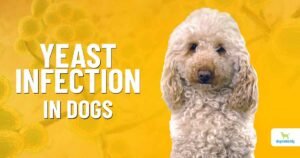
Yeast dermatitis is a common issue in dogs that can be frustrating to treat. But don’t worry … there are home remedies for yeast infection in dogs that can help solve this common cause of itchy skin. What to feed when a dog has a yeast infection is an important part of this, so let’s take a closer look at yeast in dogs.
What Is A Yeast Infection In Dogs?
Yeast is a fungus that lives in your dog’s intestines in small numbers. It’s a normal inhabitant of your dog’s digestive tract and it helps him digest his food. But when yeast is allowed to overgrow, your dog will start to suffer from what’s essentially a fungal infection. Two species of yeast in particular can be a significant problem for your dog … Candida albicans and Malassezia.
What Causes Yeast Infection In Dogs?
Yeast is normally held in check by friendly bacteria in your dog’s gut. They compete with Candida for food and attachment sites … and this keeps the yeast numbers down. But if yeast is allowed to grow out of control, it can irritate the cells lining your dog’s gut. Normally, these cells have tight junctions between them. This stops harmful bacteria, viruses and yeast from entering the blood stream from the intestines.
But yeast overgrowth will cause inflammation … and this causes the space between the cells lining the intestines to widen. When this happens, yeast and toxic byproducts can exit the digestive tract and enter your dog’s blood. This is called leaky gut.
If there’s leaky gut present, it can complicate the symptoms of yeast infection … many of the symptoms overlap. But yeast infection has a few key signs you’ll want to look for:
Yeast Infection In Dogs: Symptoms
There are a few telltale signs that will help you figure out whether your dog has a yeast infection, leaky gut or allergies. One of the key signs is changeability … yeast can change with shifts in pH or temperature.
Here are other symptoms of yeast infection in dogs you’ll want to look for:
- Chewing or licking the feet
- Dark rusty-red hair between the toes
- Black skin (often with hair loss)
- Bad smell and greasy hair (seborrhea)
- Ear infections or head shaking
- Speckles on the underbelly
- Hair loss on the tail and upper back
- Grayish or rust color around the genitals
- Diarrhea
- Seasonal allergies
- Secondary bacterial infection
It’s important to know these signs … because the longer your dog’s yeast infection goes untreated, the harder it will be to resolve.
If your dog has more than one of these signs, it might be time to treat the yeast. Here are the 4 steps you need to take to stop your dog’s yeast overgrowth.
How To Treat Yeast Infection In Dogs
Fortunately, treatment for yeast infection in dogs can be done at home. You can manage most types of yeast problems … like yeast infection in dog paws or a dog skin yeast infection … as the underlying cause is the same. Managing a dog yeast infection effectively just requires tweaking the diet and some lifestyle changes.
Dog Yeast Infection Home Remedy
There are four simple steps you need to follow:
Step 1: Stop Feeding The Yeast
Yeast has two different forms … which makes it a dimorphic organism. And the conditions the yeast lives in can change it from one form to another. When yeast is benign, it’s a single celled organism that lives fairly peacefully alongside bacteria. In this form, it doesn’t pose much harm to your dog. But sometimes yeast is allowed to grow out of control. This happens when there aren’t enough gut bacteria to compete with it. This can happen after antibiotic use, but there are other common causes (and we’ll talk about that in a bit).
When yeast doesn’t have to compete with other organisms for resources, it becomes a super yeast! It changes from a single cell structure to a larger and more complex multi-cellular fungus. When this happens, the yeast needs more and more food … and it gobbles everything up around it. This aggressive super-yeast releases over 60 different toxins that can travel anywhere in the body. These toxins irritate the gut lining and cause leaky gut. The yeast can then escape through the holes in the digestive tract and travel to your dog’s organs.
So the first step to stop yeast infections is to stop feeding it! There are two common ways you can unknowingly feed unwanted dog yeast infection:
Yeast Loves Starch and Sugar
Yeast has a silver bullet … it loves to eat sugar! So if you remove carbs and sugar from your dog’s diet, you can start to starve the yeast. Carbohydrates are complex chains made up of sugars. When your dog eats them, her body converts them into sugars and this feeds her yeast. Take a slice of bread (which is mainly carbohydrate), bite off a piece and hold it in your mouth for half a minute. You’ll notice that it starts to taste sweet. That’s because the amylase in your saliva is breaking that starch down into sugar. The same thing happens in your dog’s gut … and that sugar feeds the yeast living there.
In the wild, the foods your dog’s ancestors ate (as well as the foods that our human ancestors ate), contained only about 4% starch. But most commercial pet foods have over ten times that amount! Even grain-free foods are usually full of potatoes, sweet potatoes or tapioca and have just as much starch as other kibbles. Sources of carbs and sugars in pet foods include:
- Rice
- Millet
- Potatoes and sweet potatoes
- Wheat and corn
- Oats
- Peas
This is why a raw diet is best for yeast infection in dogs. It doesn’t have the large amount of carbohydrate that commercial foods contain. So if your dog is eating kibble today, you’ll need to switch him to a raw diet or a cooked diet that doesn’t use grains. And if you feed your dog fruits, limit it to berries: they are lower in sugar content.
Yeast Loves Heavy Metals
You might not know it, but yeast has a special affinity for heavy metals … especially mercury. Some metals have important functions in the body … like iron and zinc. As long as they’re only present in small amounts. But large amounts of metals like arsenic, cadmium, chromium, lead and mercury can be toxic to your dog.
Heavy metals generate harmful free radicals, which can damage cell membranes and cause serious health issues. In humans, it can cause Parkinson’s diseases, Alzheimer’s disease and even cancer (1). This damage is called oxidative stress and it builds up like rust in the body. Heavy metals are so toxic, they can even change your dog’s proteins and DNA. Your dog’s immune system doesn’t do a good job of removing heavy metals. So heavy metals stay in your dog’s body, build up over time, and start causing health problems.
Heavy metals can get into your dog in several ways:
- Vaccinations
- Industrial waste
- Pesticides
- Poor quality water
- Fish
- Pet foods
Research shows that detoxing the body from heavy metals can help prevent kidney disease, heart disease and neurological diseases. So there are really compelling reasons to get heavy metals out of your dog. But if your dog suffers from a yeast infection, there’s another important reason …
Yeast loves to gobble up heavy metals. Researchers are actually looking at yeast as a solution to soak up environmental heavy metals. The fact that yeast binds to heavy metals is good news for the environment … but less so for your dog. Researchers are investigating how yeast interacts with heavy metals in the intestines. And it looks like Candida and other yeasts bind to heavy metals in the intestines. This is good news … yeast grabs the heavy metals before they enter the body. But heavy metals are toxic to the beneficial bacteria that also live in the gut. As the mercury and other heavy metals kill off the competing bacteria, the yeast has less competition … and can grow out of control.
So if you want to kill a dog yeast infection, you have to reduce the number of heavy metals. Here are some things that will help:
- Avoid vaccinations whenever possible
- Don’t give your dog fluoridated water
- Avoid feeding fish and low-quality fish oil
- Feed organic food when you can (glyphosate is loaded with heavy metals)
Once you limit the heavy metals going into your dog, you can start working on removing them.
A Note About Yeast-Die-Off
As yeast start to die, they can release a toxic substance called acetaldehyde. Acetaldehyde is the byproduct from digesting alcohol and it’s thought to be the toxin that causes hangovers. Yeast also produces a toxin called gliotoxin that can harm your dog’s liver. So your dog can get hangover-like symptoms from yeast die-off.
The heavy metals the yeast holds are toxic to your dog … and if the yeast is killed quickly, the heavy metals will be released into your dog’s circulation. This is often mistaken for yeast die-off … and it can cause the same flu-like symptoms in your dog. You might see nausea, diarrhea, joint pain or just a general sickness as your dog detoxifies from the heavy metals the yeast releases. This is called the Herxheimer Reaction … and it usually lasts from a few days to a few weeks.
The symptoms of yeast die-off can include:
- Diarrhea
- Worsening of symptoms
- Discharge from eyes, nose, skin and ears.
- Joint soreness
These symptoms should only last a few days to a few weeks … then your dog should start looking and feeling much better. If you suspect the Herxheimer reaction is happening, there are two things you can do to help:
1. Give digestive enzymes: They can help quickly digest and eliminate dead yeast cells.
2. Give humic/fulvic acid, bentonite clay and chlorella: They can help bind to heavy metals.
Step 2: Destroy The Yeast Biofilm
Yeast cells have a protective shell made up of several layers. This tough outer shell is called a biofilm and it’s what makes yeast tough to kill. Once this protective biofilm is stripped off, the yeast no longer has a safe house to protect it from the immune system. Digestive enzymes are special proteins that help your dog digest his food. They’re also the enemy of yeast … they can digest yeast’s biofilm. And while yeast can build up immunity to some antifungal meds, they’re always susceptible to enzymes.
The biofilm is mainly made of fiber, but also fats and proteins … so it’s important to use digestive enzymes that break down all three of these substances. An important addition is cellulase, a plant-based digestive enzyme. Cellulase breaks down the fiber in yeast’s shell … but your dog doesn’t manufacture it, so it needs to be given as a supplement. Other digestive enzymes will break down the fats and proteins in the biofilm.
It’s important to give your dog digestive enzymes between meals. If given with meals, the enzymes will digest your dog’s food and not the yeast cell walls. Enzymes will also make your dog’s digestive tract more acidic, which makes it less hospitable to both yeast and harmful bacteria. Another benefit to digestive enzymes is that they can reduce the symptoms of yeast die-off. If your dog becomes too uncomfortable, you can increase the digestive enzymes or reduce the amount of anti-fungal foods.
Step 3: What To Feed A Dog With A Yeast Infection
The best diet for a dog with yeast is a whole food, raw diet, avoiding any starchy carbohydrates. Then, once you’ve stopped feeding the yeast and you’ve broken up the biofilm, you’ll want to add antifungal foods and supplements to your dog’s diet. Use as many as your dog can tolerate … but if he’s showing signs of yeast die-off, go more slowly.
Here are some of the top performing antifungal herbs:
Caprylic Acid
This is a medium chain triglyceride (MCT) found in coconut oil and palm oil. Of course, you want to be kind to the planet and make sure your caprylic acid never comes from palm oil. Research shows caprylic acid can directly treat some yeast infections. It’s believed it can destroy Candida by destroying its cell membrane. Ideally, your dog’s caprylic acid would come from MCT oil. Research done on the benefits of coconut oil weren’t done on the same coconut oil you would buy at the grocery store … they were done using only the MCTs.
Coconut oil is also a poor choice for managing yeast infection in dogs because of its lauric acid content. Lauric acid promotes inflammation in the digestive tract. This is a key cause of leaky gut. So a good quality MCT oil might be a better source of caprylic acid than coconut oil. And as a bonus, it’s been shown to be a potential way to manage seizures in dogs.
MCT oil can cause diarrhea in your dog if you give too much. So start slowly and work your way up. Try starting at a quarter tsp for large and medium sized dogs.
Olive Leaf
Like caprylic acid, olive leaf is believe to break down the Candida cell membrane. Its active antifungal substance is oleuropein. This is what gives olive oil its bitter taste. Olive leaf has been shown to prevent and manage yeast in multiple studies .. so it’s a great addition to fight yeast.
Use the powdered form for your dog. The dose is:
- Small Dog 1/4 teaspoon daily
- Medium Dog 1/2 teaspoon daily
- Large Dog 1 teaspoon daily
You can slowly increase the dose (up to 500mg twice daily for large dogs), but go slowly to avoid the Herxheimer reaction.
Pau D’Arco
This is a proven antifungal from the rain forests of South America. Pau d’arco contains naphthoquinones, which can kill fungi (as well as parasites and viruses). Plus it contains lapachol, a substance known to kill yeast. But be careful … lapachol should not be given to pregnant dogs.
Pau d’arco is available in supplement form, but it’s important to find one of a higher quality. The amount of lapachol varies from tree to tree, so it must be standardized. Give pau d’arco as a dried herb. Canine Herbalist Rita Hogan recommends dosing twice daily with food, in these amounts:
- 100 mg for extra small dogs
- 200 mg for small dogs
- 300 mg for medium dogs
- 400 mg for large dogs
- 500 mg for extra large dogs
Goldenseal
Goldenseal contains a compound called berberine. This is an alkaloid that helps the plant defend itself from fungus and bacteria. It’s a well-known antifungal that has been shown to fight yeast in studies. Goldenseal should not be given in pregnant or hypoglycemic dogs and should not be given long term in large doses. Give goldenseal once or twice daily in these amounts:
- Dried powder: use 1 teaspoon per 20 pounds
- Tincture: Give 5 – 10 drops per 20 pounds
Those are four proven yeast killers you’ll want to use. .
Once you’ve stopped feeding the yeast and you’ve added the above foods and supplements to kill off the yeast, it’s time for the final step ..
Step 4: Crowd Out The Yeast
If you switch your dog to a raw diet and reduce the heavy metals in his diet and environment, you’ll start to starve the Candida and harmful yeasts. And that’s good! And now you have some supplements to help kill the yeast. Also good.
But dog yeast infections are tough … it’s often hard to limit heavy metals and there will always be some food for the Candida to eat. So you need to create a gut environment that’s not hospitable to yeast. There are a few ways to do this:
Avoid Gut Harming Chemicals
Yeast can’t grow out of control if your dog’s gut has healthy populations of bacteria. Yeast can’t take over the neighborhood and all its resources unless its neighbors can’t defend their territory. So if you want to crowd out the yeast populations, you have to stop doing things that cause its neighbors to lose real estate. Besides sugar, here are common things that can harm your dog’s gut bacteria:
- Antibiotics: Antibiotics will destroy both the bad bacteria and the good bacteria. Without the competition, yeast can take over and grow out of control.
- Toxins: There are toxins in your dog’s food, water and environment that will damage the beneficial bacteria that keep yeast in check. You’ll want to avoid:
- Unnecessary vaccines
- Drugs and chemicals
- Flea and tick preventatives
- Cleaning products
- Foods high in herbicides like glyphosate
- Cortisone medications
- Thyroid medications
- Stress
These will all cause unwanted changes in your dog’s gut. So a clean diet and living environment will make sure you don’t damage any of those friendly bacteria populations. Once you make the neighborhood “probiotic friendly” again, it’s time to get them to move back in …
Add Probiotics
After you make the microbiome a nicer place for beneficial bacteria to live, it’s time to start adding probiotics to your dog’s diet. There are many probiotic supplements you can choose from. Not all probiotics will fight yeast, but these strains have good research behind them. And they’re regular inhabitants in your dog’s gut:
- Lactobacillus acidophilus
- Lactobacillus casei
- Lactobacillus plantarum
- Lactobacillus reuteri
- Lactobacillus rhamnosus
- Bifidobacterium bifidum
- Bifidobacterium longum
Best Probiotics For Yeast Infection In Dogs
Soil based probiotics (SBOs) are a different class of probiotics. Most bacteria like Lactobacillus and Bifidobacterium are fragile … they’re easily destroyed by your dog’s acidic gut. But SBOs are spore-forming. This means they can form a protective coating that makes them resistant to heat, acid and antibiotics. It also makes them more likely to survive the large intestine compared to other probiotic strains.
These soil-based probiotics are proven to help fight yeast overgrowth directly:
- Bacillus coagulans
- Bacillus subtilus
Pediococcus acidilactici is an additional probiotic that bears special mention. It prevents undigested food from accumulating in the gut and attracting unwanted yeast and bacteria. Another study found that it protects the gut lining from harmful organisms.
Avoid Fermented Foods
Many foods are rich in probiotics, including yogurt, kefir, kimchi and kombucha. You might think these foods would help crowd out your dog’s yeast. But you’ll want to avoid fermented food until your dog’s yeast is back under control.
This might seem counterintuitive since your dog needs probiotics. But fermentation happens when the carbohydrates and sugars in food are eaten by bacteria and yeast. So the prebiotics found in fermented food will also feed the yeast in your dog’s intestines! It’s best to leave the fermented foods alone until your dog’s yeast infection is resolved.
Fight Yeast With Yeast
There’s a special probiotic called Saccharomyces boulardii. What’s unique about this probiotic is that it’s not bacteria … it’s actually yeast. You might be thinking you don’t want to add any more yeast to your dog’s problems! But S. boulardii has been shown to stop Candida from moving out of the digestive tract and into the bloodstream and organs. And it also reduces the inflammation Candida causes and reduces its colonization.
Add Prebiotics
It’s important to remember that probiotics only live in your dog’s gut for a day or a few days. So you can’t stop at probiotics. If you want to grow your dog’s bacteria populations, you need to do more … you need to give your dog prebiotics. Just as yeast loves to eat carbs and sugar, friendly bacteria love to eat starch. Not to be confused with carbs, the starch that feeds yeast is the kind your dog can’t digest. You might know it as fiber.
So if you really want to increase the numbers of bacteria in your dog’s gut … feed them with fiber! Prebiotics will do a much better job than just giving probiotics for a couple of reasons:
- Most of the friendly bacteria in your dog’s gut aren’t found in probiotic supplements
- Probiotics don’t grow bacteria populations as well as prebiotics do
So prebiotics are a critical part of your dog’s fight against yeast. Plus, fiber can reduce mercury levels in the brain and body. Here are some important, food-based prebiotics you should add to your dog’s diet:
- Dandelion root
- Burdock root
- Chlorella (also detoxes the brain from mercury)
- Low-sugar berries (like raspberries)
Remove The Heavy Metals
Your final job is to remove all those heavy metals the dead yeast will dump into your dog’s body. Fiber will already do a good job of this … but there are foods that can help with this job:
- Chlorella (This green algae has been shown to reduce the absorption of mercury in mice.)
- Foods Rich In Sulphur (Foods that are rich in sulphur can bind to heavy metals and reduce the oxidative damage in organs. These include garlic and broccoli. These supplements have also been shown to chelate (bind to) heavy metals:
- Glutathione
- Citrus pectin from brown seaweed
- Sulphur-containing amino acids (like taurine and methionine)
- Selenium
- Bentonite clay
- Humic and fulvic acid
So there you have it … the four simple steps to managing a dog yeast infection! If your dog is really suffering, go slow. These are changes that will last a lifetime, so slow and steady wins the race against yeast.
References
1. Rice KM et al. Environmental mercury and its toxic effects. J Prev Med Public Health. 2014;47(2):74-83.
2. Sears ME. Chelation: Harnessing and enhancing heavy metal detoxification–a review. ScientificWorldJournal. 2013.
3. Kim J et al. Heavy metal toxicity: An update of chelating therapeutic strategies. Journal of Trace Elements in Medicine and Biology. 2019;54:226-31.
4. Matsubara VH et al. Probiotics as antifungals in mucosal candidiasis. Clinical Infectious Diseases. 1 May 2016;62(9):1143-53.
5. Wei GX et al. In vitro synergism between berberine and miconazole against planktonic and biofilm Candida cultures. Arch Oral Biol. 2011 Jun;56(6):565-72.
6. Genet J. Remedios naturales para infecciones vaginales [Natural remedies for vaginal infections]. Sidahora. 1995:40-1.
7. Zorić N et al. Antifungal activity of oleuropein against candida albicans. Molecules. 2016 Nov 28;21(12):1631.
8. Rogero MM et al. Obesity, inflammation, toll-like receptor 4 and fatty acids. Nutrients. 2018;10(4):432.
9. Law TH et al. A randomised trial of a medium-chain TAG diet as treatment for dogs with idiopathic epilepsy. Br J Nutr. 2015 Nov 14;114(9):1438-47.
10. Omura Y et al. Caprylic acid in the effective treatment of intractable medical problems of frequent urination, incontinence, chronic upper respiratory infection, root canalled tooth infection, ALS, etc., caused by asbestos & mixed infections of Candida albicans, helicobacter pylori & cytomegalovirus with or without other microorganisms & mercury. Acupunct Electrother Res. 2011;36(1-2):19-64.
11. Yu-Feng Li et al. Organic selenium supplementation increases mercury excretion and decreases oxidative damage in long-term mercury-exposed residents from Wanshan, China. Environ Sci Technol. 2012 Oct 16;46(20):11313-8.
12. Eliaz I et al. Integrative medicine and the role of modified citrus pectin/alginates in heavy metIntegrative medicine and the role of modified citrus pectin/alginates in heavy metal chelation and detoxification – five case reports. Forsch Komplementärmed. 2007;14:358-364
13. Orr SE et al. Chronic kidney disease and exposure to nephrotoxic metals. Int J Mol Sci. 2017 May 12; 18(5):1039.
14. Takuya U et al. The influence of Parachlorella beyerinckii CK-5 on the absorption and excretion of methylmercury (MeHg) in mice. J Toxicol Sci. 2021 Feb;35(1):101-5
15. Takuya U et al. Chlorella suppresses methylmercury transfer to the fetus of mice. J Toxicol Sci. 2011 Aug 3;36(5):675-680.
16. Shuzhen Lei et al.Capability of iturin from Bacillus subtilis to inhibit Candida albicans in vitro and in vivo. Appl Microbiol Biotechnol. 2019 Jun;103(11):4377-4392.
17. Krasowska A et al. The antagonistic effect of Saccharomyces boulardii on Candida albicans filamentation, adhesion and biofilm formation. FEMS Yeast Research. 2009 Dec;9(8):1312–1321.
18. Jyotsna Chandra et al. Biofilm Formation by the Fungal Pathogen Candida albicans: Development, Architecture, and Drug Resistance. J Bacteriol. 2001 Sep;183(18):5385-5394.
19. Soll DR, Daniels KJ. Plasticity of Candida albicans Biofilms. Microbiol Mol Biol Rev. 2016;80(3):565-595. Published 2016 Jun 1. 20. Jeniel E Nett (2014) Future directions for anti-biofilm therapeutics targeting Candida, Expert Review of Anti-infective Therapy, 12:3, 375-382,