
Introduction
Canine obedience training is a fundamental aspect of responsible dog ownership, influencing not only the relationship between dogs and their human companions but also the overall well-being of the animal. A well-trained dog is often a happier dog, capable of navigating various social settings and environments with confidence and ease. This article will explore essential training techniques grounded in evidence-based practices, providing a comprehensive guide for dog owners seeking to unlock their canine companions’ potential.
Understanding Canine Behaviour
Before delving into specific training techniques, it is essential to understand the underlying principles of canine behaviour. Dogs are social animals that thrive on structure and routine. Their ability to learn and adapt is influenced by several factors, including genetics, early socialisation experiences, and the environment in which they are raised.
The Importance of Socialisation
Socialisation is a critical phase in a dog’s development. Puppies between the ages of three and 14 weeks are particularly receptive to new experiences, which can significantly shape their behaviour as adults. Exposing them to various stimuli—such as different people, environments, and other animals—during this formative period can enhance their adaptability and reduce the likelihood of fear-based behaviours later in life.
The Role of Reinforcement
Positive reinforcement is a cornerstone of effective training. This method involves rewarding desirable behaviours to encourage their recurrence, leveraging the dog’s natural proclivity to seek pleasurable experiences. Rewards can take various forms, including treats, praise, or playtime, and should be given immediately following the desired behaviour to reinforce the connection.
Essential Training Techniques
1. Clicker Training
Clicker training is a popular technique that utilises a distinct sound—produced by a handheld clicker—to mark desired behaviours. This method capitalises on the principles of operant conditioning, effectively communicating to the dog exactly what action is being rewarded.
How to Implement Clicker Training:
-
Introduce the Clicker: Start by associating the sound of the clicker with a reward. Click the device and immediately give your dog a treat. Repeat this until your dog understands that the click signifies a reward.
-
Marking Behaviours: Once your dog associates the click with a reward, begin using the clicker when your dog performs a desired behaviour, such as sitting or lying down.
-
Gradual Fading of the Clicker: As your dog becomes more proficient, you can gradually reduce the frequency of clicks while maintaining the reward system to reinforce the behaviour.
2. Leash Training
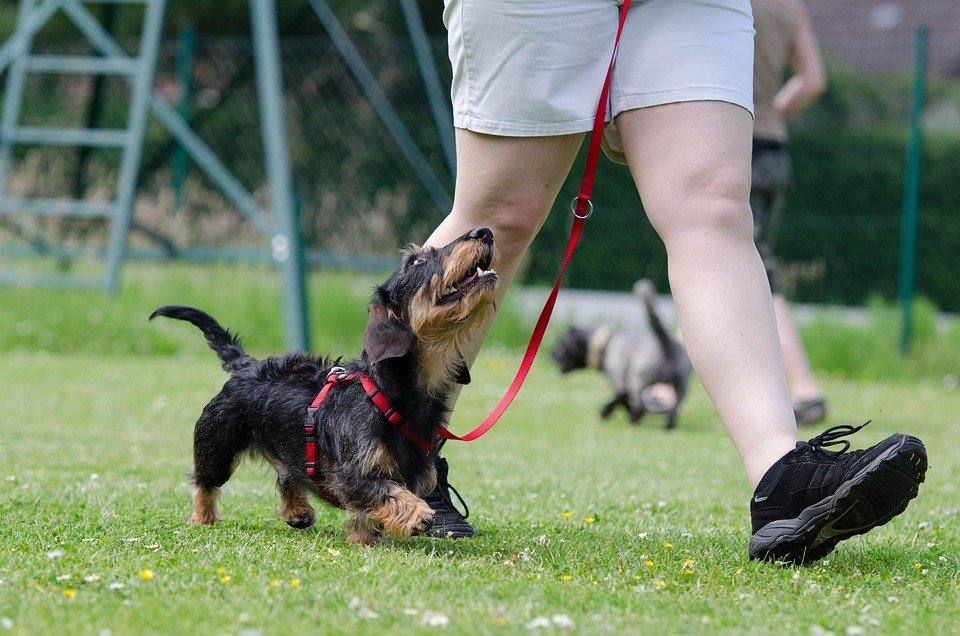
Proper leash training is vital for ensuring safe and enjoyable walks. Pulling on the leash can lead to discomfort for both the dog and the owner, making it essential to teach the dog to walk politely beside you.
Steps for Effective Leash Training:
-
Choose the Right Equipment: Use a well-fitting harness or collar and a standard leash to maintain control.
-
Start Indoors: Begin training in a distraction-free environment. Encourage your dog to walk beside you using treats to reward them for staying close.
-
Introduce Distractions Gradually: Once your dog masters walking indoors, gradually introduce distractions such as other animals or people, rewarding them for maintaining focus.
3. The “Leave It” Command
Teaching your dog the “leave it” command is an essential safety measure. This command can prevent your dog from picking up dangerous or inappropriate items during walks or in the home.
Steps to Train “Leave It”:
-
Set Up the Scenario: Place a treat on the ground and allow your dog to approach it.
-
Introduce the Command: As your dog reaches for the treat, calmly say “leave it.” If they withdraw, reward them with a different treat.
-
Practice Regularly: Repeat this exercise, gradually increasing the difficulty by placing the treat in more challenging locations.
4. The Recall Command
A reliable recall is crucial for your dog’s safety, allowing you to call them back from potentially dangerous situations.
Steps for Training Recall:
-
Start in a Controlled Environment: Begin training in a quiet area with minimal distractions.
-
Use a Consistent Cue: Choose a specific word or phrase, such as “come,” and use it consistently.
-
Reward Immediately: When your dog comes to you, reward them with treats and praise to reinforce the behaviour.
-
Increase Distance and Distraction: Gradually increase the distance and introduce distractions as your dog becomes more reliable in their recall.
Professional Advice on Obedience Training
Consistency is Key
Consistency in training is crucial for success. Use the same cues and commands every time to avoid confusing your dog. All family members should be on the same page regarding training techniques and commands.
Patience and Persistence
Training takes time. Be patient with your dog, and understand that setbacks are a natural part of the learning process. Celebrate small victories to maintain motivation for both you and your dog.
Tailoring Techniques to Individual Dogs
Every dog is unique, with different personality traits and learning styles. Tailor your training approach to suit your dog’s individual needs, using various techniques and rewards to find what works best.
Seeking Professional Help
If you encounter persistent behavioural challenges, consider consulting a certified dog trainer or a veterinary behaviourist. These professionals can provide tailored guidance and support based on your dog’s specific needs.
FAQs
1. How long should I train my dog each day?
Short, consistent training sessions of 5 to 15 minutes are often more effective than longer sessions. Multiple short sessions throughout the day can reinforce learning without overwhelming your dog.
2. What age should I start training my puppy?
Training can begin as early as eight weeks of age. Focus on basic commands and socialisation during the early months, gradually introducing more complex behaviours as your puppy matures.
3. Is punishment effective in dog training?
Punishment can lead to fear and anxiety, damaging the human-animal bond. Positive reinforcement is a more effective and humane approach to training, fostering a trusting relationship between you and your dog.
4. How can I improve my dog’s focus during training?
Minimise distractions during training sessions by choosing a quiet environment. Gradually increase distractions as your dog becomes more skilled at focusing on you.
5. When should I seek help from a professional trainer?
If you are struggling with training or if your dog exhibits problematic behaviours such as aggression or extreme fear, it is advisable to seek the guidance of a professional trainer or a veterinary behaviourist.
Conclusion
Mastering obedience through essential training techniques is a rewarding journey that enhances the bond between dogs and their owners. By understanding canine behaviour, employing effective training methods, and maintaining a consistent and positive approach, dog owners can unlock their companions’ potential. This not only fosters good behaviour but also contributes to a happier, healthier, and more fulfilling life for both the dog and its owner.